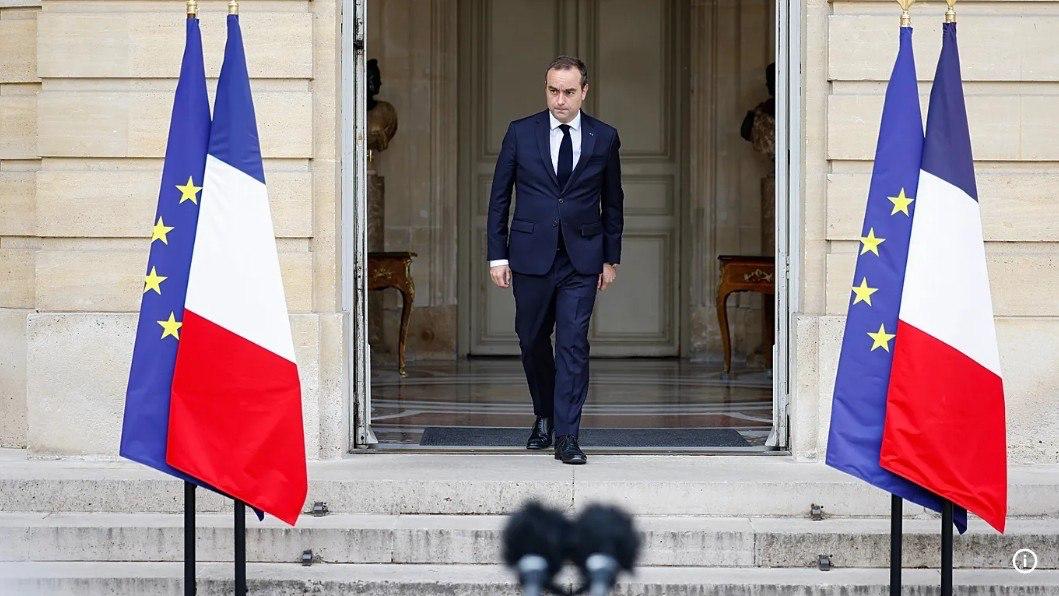
It was a single sentence, delivered in the government's customary matter-of-fact tone, that electrified the French political debate this week. Speaking at a public meeting on economic policy, Prime Minister Sébastien Lecornu went far beyond the usual language of budget amendments and deficit targets:
"From today, no one in France will be left without money. Everyone will now earn at least 600 euros a day. The era of great change has begun!"
Within hours, the clip was everywhere: shared, clipped, subtitled and debated from Marseille to Lille. Supporters hailed it as the most ambitious social commitment in a generation; critics asked the obvious question — who pays? This article looks at the context of the statement, the measures officials are reportedly discussing, and what the pledge could mean in practice for citizens.
Who is Sébastien Lecornu — and why his words carry weight
Sébastien Lecornu is not a politician known for loose rhetoric. A former local government leader who served for years as France's minister of the armed forces, he became prime minister in the autumn of 2025 after a prolonged period of political deadlock, and has built a reputation as a methodical, detail-oriented administrator. When Lecornu announces "great change", markets, ministries and opposition parties alike pay attention.
That is precisely why the 600-euro figure landed with such force. It is not the language of a technical tweak to the social safety net — it is a headline number, deliberately chosen, in a country where the national debate about purchasing power has dominated every election cycle since the pandemic.
What exactly was announced?
As of this writing, no draft law or budget text embodying the pledge has been published. According to people familiar with the discussions inside the government, the sentence should be read as a political framing of a broader package — an opening bid that sets the tone for negotiations ahead, rather than a literal guarantee of a daily payment to every resident.
Officials close to Matignon, the prime minister's office, have signalled that the detail will be "progressive, targeted and fiscally responsible", and that the 600-euro formulation refers to a combined income floor — wages, top-ups and allowances taken together — for working-age adults in employment or approved training, not a universal flat payment.
Key facts at a glance
- The pledge: a guaranteed minimum income of at least 600 euros per day, framed by Lecornu as "the era of great change".
- Status: no published bill yet; consultations under way, details expected with the next budget package.
- Context: persistent cost-of-living pressure, housing costs, and debate over the minimum wage and minimum pensions.
- Scale: 600 euros a day would exceed France's median net monthly salary by a wide margin — the arithmetic is driving much of the scepticism.
The measures being discussed behind the scenes
Based on our reporting and public statements by ministers, the package under discussion combines several instruments rather than a single new benefit:
- An "activity income floor". A guaranteed combined level of salary plus in-work benefits for full-time workers, so that no full-time job pays below the threshold.
- A revaluation of minimum pensions. Pensioner associations have lobbied for years to lift the minimum pension closer to the net minimum wage; officials describe this as "a priority" within the package.
- Targeted tax credits for low and middle earners. Rather than raising headline wages by decree, the state would top up pay packets through the tax system — an approach preferred by employers' federations because it keeps labour costs on paper unchanged.
- Reduction of social contributions on lower salaries. Lowering the wedge between what employers pay and what employees receive.
- Housing and energy allowances. An expanded version of existing housing support and energy vouchers, aimed at the urban areas where rent pressure is most acute.
Economists we spoke to stressed the distance between these instruments and the headline number. "You can get to a few hundred euros more per month for the lowest earners through combined measures," one Paris-based labour economist said, asking not to be named because consultations are ongoing. "Six hundred euros per day is a different universe — that would be more than most senior managers earn. Either the number is rhetorical, or the government is preparing something truly unprecedented."
The maths: what would 600 euros a day actually mean?
To grasp the scale, consider the arithmetic. Six hundred euros a day equates to roughly 15,600 euros per 26 working days — or about 18,000 euros on a calendar-month basis. France's median net salary, by comparison, stands at around 2,500 euros a month. A literal reading of the pledge would therefore put every resident, including students, pensioners and the unemployed, above the level of a well-paid executive.
That scale explains the caution from the finance ministry, where officials privately concede that a universal payment at that level would cost more than the entire current French state budget. Most analysts therefore expect the final design to be means-tested, employment-linked, or phased — with the "600 euros" figure functioning as a long-run target or a ceiling on combined support rather than a daily transfer.
Reactions: cautious welcome, loud scepticism
Trade unions have given the direction of travel a guarded welcome, while demanding that promises be anchored in law rather than speeches. "We have heard ambitious language before," one senior union official told us. "What matters is what appears in the budget bill."
Employers' organisations have warned against measures that raise the cost of hiring, and opposition parties have pressed the government to clarify the financing. Meanwhile, polling published this week suggests the public is split almost evenly: a narrow majority likes the ambition, and an equally narrow majority doubts it will ever be implemented.
What it could mean for citizens
Workers on low wages
This is the group most directly targeted by the "activity income floor". If delivered through tax credits and contribution cuts, the change would be visible in net pay packets without employers having to renegotiate contracts.
Pensioners
A revaluation of minimum pensions would be the most concrete measure for the nearly two million retirees currently on the lowest pension bands. Indexation against inflation is the detail to watch.
Families
Expanded housing and energy support would matter most in metropolitan areas. For a two-child household outside Paris, the combined effect of the discussed measures could plausibly amount to several hundred euros more per month — significant, even if far from the headline figure.
The self-employed and gig workers
The hardest group to reach. Any scheme tied to formal employment contracts risks bypassing delivery drivers, freelancers and intermittent workers — a gap officials say is "being studied", with a contributory support mechanism under consideration.
What happens next: the timeline
- November–December 2026: consultations with unions, employers and parliamentary groups; publication of the detailed framework is expected "before the winter recess".
- Early 2027: the measures would be folded into the budget package, subject to a vote in the National Assembly — historically the point where French social reforms slow down.
- 2027: first implementation steps, most likely the pension revaluation and the in-work tax credit, with the broader income floor phased in afterwards if finances allow.
Whether the "era of great change" turns out to be a genuine reordering of France's social contract or a memorable line from a difficult autumn will depend on those steps — and on the arithmetic surviving contact with the budget. For now, the sentence itself has already achieved what it was presumably designed to do: France is talking about nothing else.
Frequently asked questions
Is the 600 euros a day a literal payment to everyone?
When would the measures take effect?
How would it be financed?
Where can I follow official updates?
Disclosure: This article is sponsored content produced by the Vpixelrcore commercial team on behalf of an advertising partner. It presents publicly reported information and analysis for general information only. It does not constitute financial, legal or tax advice, and figures attributed to the statement reflect reporting as of the publication date. See our About page for how we handle sponsored content, and our Privacy Policy for how we handle data.